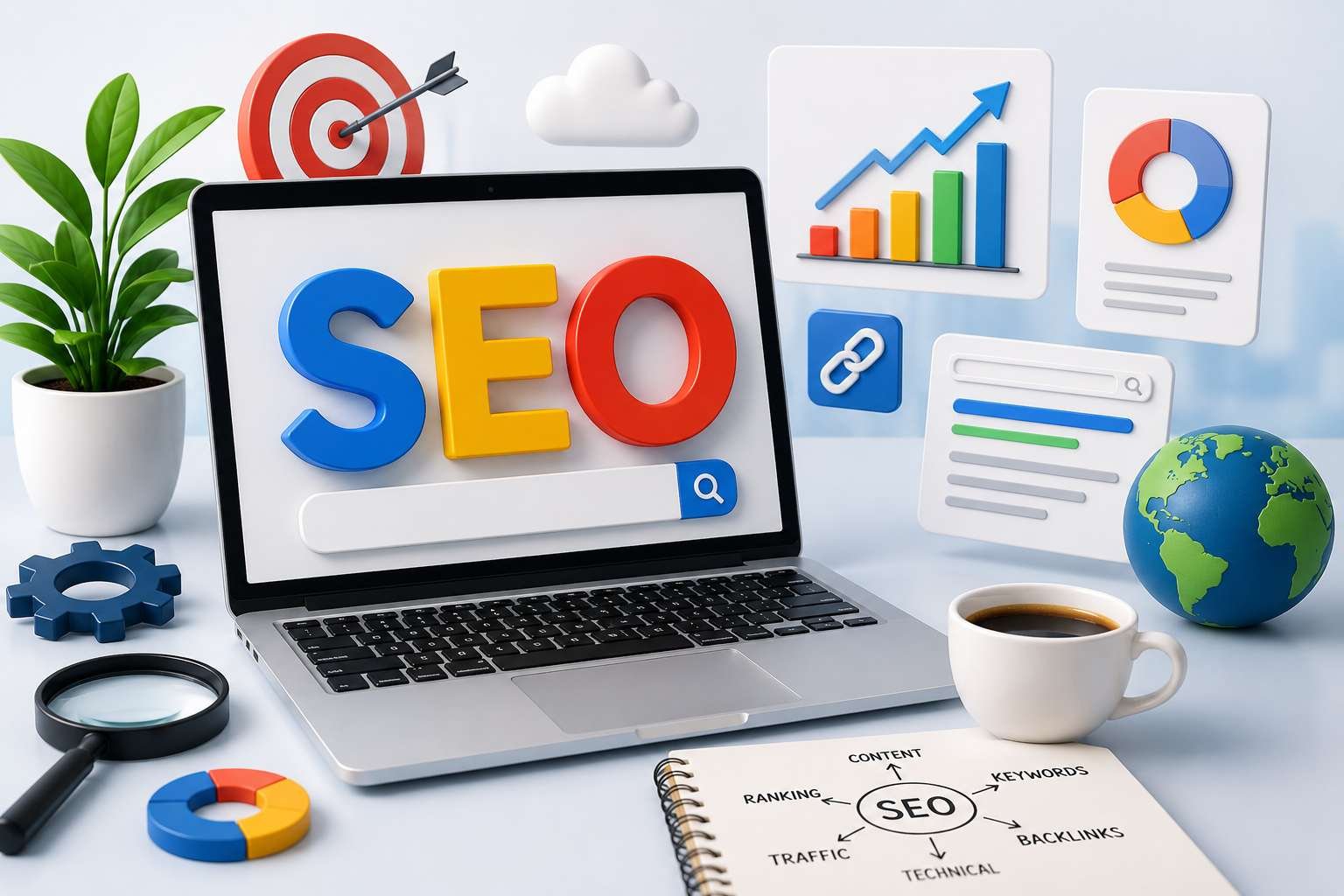
SEO, or Search Engine Optimization, is the process of improving a website so that it can appear more prominently in search engine results for relevant searches. The goal of SEO is to increase organic traffic, attract the right audience, and help a website gain more visibility online without relying entirely on paid advertising.
When people search for products, services, answers, or information on search engines such as Google, SEO helps businesses and websites improve their chances of appearing in relevant results.
Why Is SEO Important?
SEO is important because search engines are one of the main ways people discover websites online. A well-optimized website can attract visitors who are already searching for topics, products, or services related to the business.
Good SEO can help a website:
- Increase organic website traffic
- Improve search visibility
- Reach a relevant audience
- Build online credibility
- Generate leads and sales
- Support long-term digital marketing growth
Unlike paid advertising, organic search traffic does not require paying for every individual click.
How Does SEO Work?
Search engines use automated systems to discover, understand, and rank web pages. SEO helps make a website easier for search engines to crawl and understand while also improving the experience for visitors.
Search engines consider many signals when determining which pages are useful for a particular search. These can include content relevance, website quality, page experience, links, technical factors, and other signals.
SEO is therefore not simply about adding keywords to a page. It involves improving multiple aspects of a website.
Types of SEO
On-Page SEO
On-page SEO focuses on elements that can be optimized directly on a webpage.
This can include page titles, headings, content, keyword usage, internal links, images, URLs, and meta descriptions.
The main objective is to create useful, relevant content that clearly addresses what users are searching for.
Technical SEO
Technical SEO focuses on the technical aspects of a website that can affect crawling, indexing, and user experience.
Important areas can include website speed, mobile usability, site structure, HTTPS, XML sitemaps, canonicalization, structured data, and crawlability.
A technically sound website makes it easier for search engines to access and understand its content.
Off-Page SEO
Off-page SEO involves activities outside your website that can contribute to its authority and visibility.
One important area is earning high-quality backlinks from relevant and trustworthy websites. Brand mentions, digital PR, and other forms of online reputation can also support an SEO strategy.
The focus should be on earning genuine references rather than creating large numbers of low-quality links.
What Are Keywords in SEO?
Keywords are words or phrases that people enter into search engines.
For example, someone looking for a digital marketing company might search for phrases such as “digital marketing agency” or “SEO services.”
Keyword research helps businesses understand what their target audience is searching for. These insights can then be used to create relevant pages and content.
However, keywords should be used naturally. Creating content primarily to repeat keywords can result in a poor user experience.
SEO and Content
Content plays an important role in SEO. High-quality content should provide useful information, answer users’ questions, and satisfy the purpose behind their search.
A strong content strategy may include blog posts, service pages, product pages, guides, FAQs, case studies, and other useful resources.
Instead of creating content only for search engines, businesses should focus on creating content that genuinely helps their audience.
How Long Does SEO Take?
SEO is generally a long-term marketing strategy rather than an immediate traffic solution.
The time required to see meaningful results depends on factors such as website authority, competition, industry, technical condition, content quality, backlinks, and the effectiveness of the SEO strategy.
Some improvements can become visible relatively quickly, while competitive keywords may require months of consistent work.
SEO vs Paid Advertising
SEO focuses primarily on earning organic visibility in search results, while paid advertising involves paying platforms to display advertisements.
Paid campaigns can generate traffic quickly when properly configured, whereas SEO generally takes longer to build but can provide continuing organic visibility.
Many businesses use SEO and PPC together to create a broader search marketing strategy.
Common SEO Mistakes
Some common SEO mistakes include keyword stuffing, publishing low-quality content, ignoring technical problems, creating duplicate pages, using poor-quality backlinks, and failing to optimize for mobile users.
Another common mistake is expecting immediate results. SEO usually requires consistent optimization, content development, monitoring, and improvement.
How to Improve Your Website’s SEO
Start by making sure your website is technically accessible and mobile-friendly. Research relevant search terms and create useful content around topics that match your audience’s needs.
Optimize page titles, headings, URLs, images, and internal links. Improve website speed and user experience, and build authoritative backlinks naturally through valuable content and legitimate digital PR.
Regularly monitor organic traffic, rankings, indexing, and conversions to understand what is working and where improvements are needed.
Conclusion
SEO (Search Engine Optimization) is a digital marketing practice focused on improving a website’s visibility in organic search results. It combines content optimization, technical improvements, keyword research, internal linking, and off-page strategies to help websites attract relevant visitors.
A successful SEO strategy focuses not only on search rankings but also on providing a useful experience that turns visitors into leads, customers, or returning users.
FAQs About SEO
1. What does SEO stand for?
SEO stands for Search Engine Optimization. It involves optimizing websites and their content to improve visibility in organic search engine results.
2. Why is SEO important for a business?
SEO can help businesses increase organic visibility, attract relevant website visitors, generate leads, build credibility, and support long-term online growth.
3. What are the main types of SEO?
The main areas are on-page SEO, technical SEO, and off-page SEO. Together, they address content, website technology, authority, and other factors that can influence search visibility.
4. How long does SEO take to show results?
There is no fixed timeframe. Results depend on competition, website condition, content quality, authority, technical factors, and the SEO strategy being implemented. Meaningful results often require consistent work over time.
5. Is SEO better than Google Ads?
Neither is universally better. SEO can build long-term organic visibility, while Google Ads can provide faster paid traffic. Many businesses benefit from using both strategies based on their goals and budget.